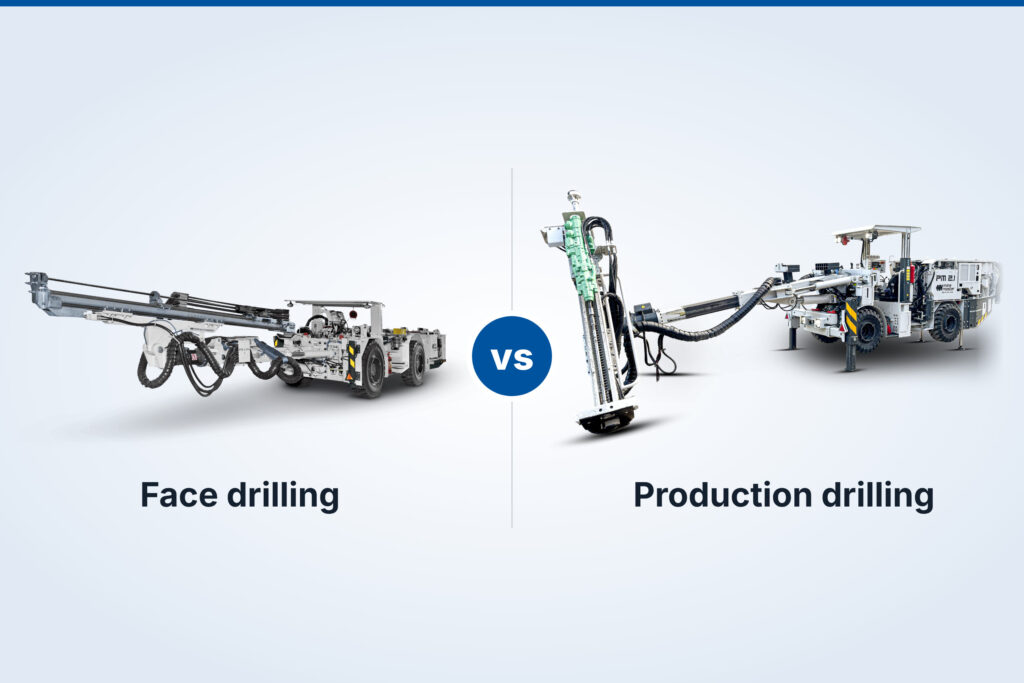
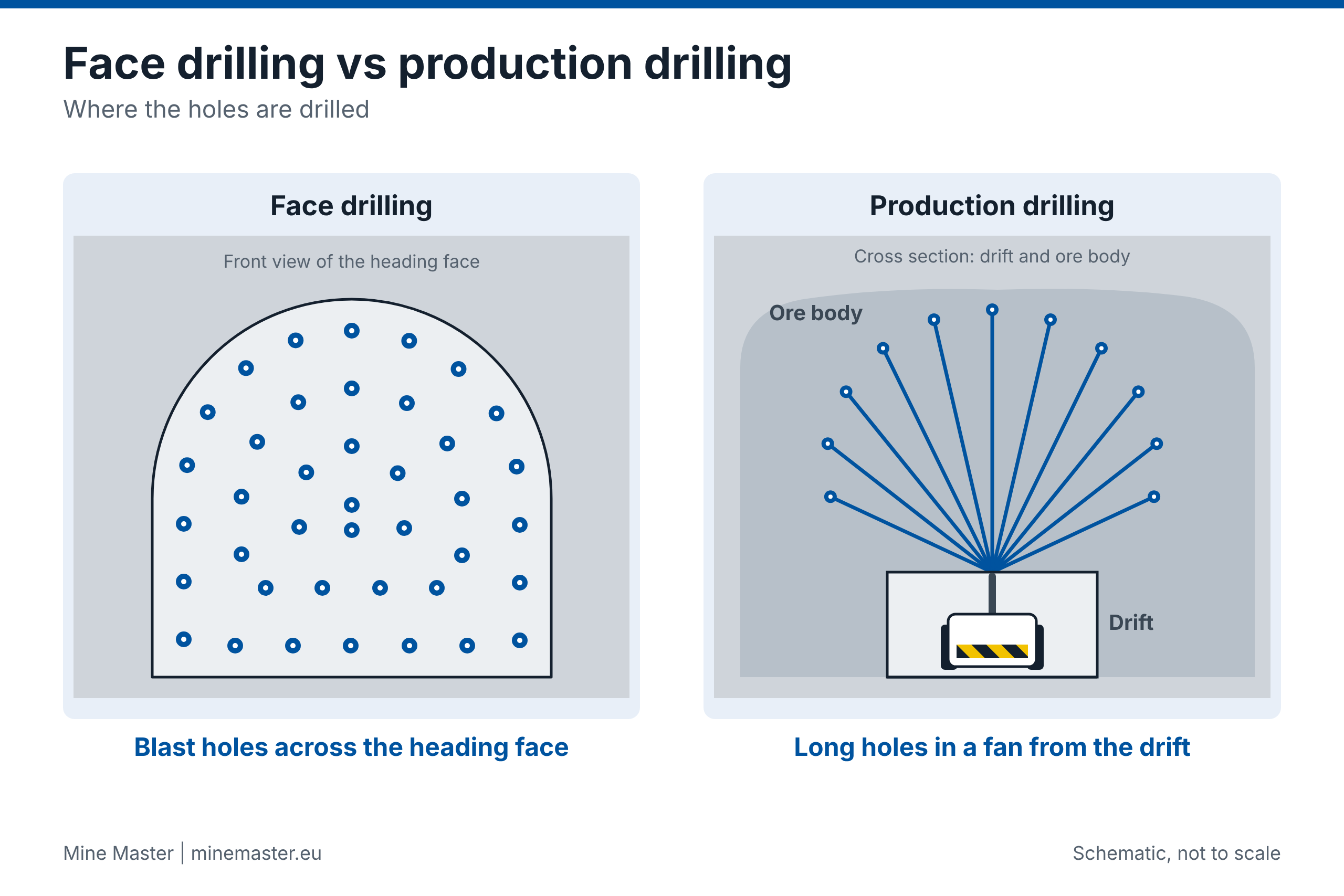
Face drilling and production drilling are two different drilling tasks, not two lengths of the same job. A face drilling rig drills the blast hole pattern in a heading face, to drive the heading or, in some mines, to mine ore directly. A production (longhole) drilling rig drills long holes in fans, rings or parallel patterns from a drift into the ore body. The right rig depends on the task, the size of the heading and the hole length you need, not on the name of the machine.
| Face drilling | Production drilling | |
|---|---|---|
| Task | Blast hole pattern in the heading face, for development rounds or, in some mines, for ore extraction | Long holes for blasting larger volumes of ore from inside the ore body |
| Holes | Blast holes spread across the face according to a drilling pattern | Fans, rings or parallel holes, upholes and downholes in vertical or inclined planes |
| Hole length | Set by feeder and rod length (for example 3.2 m net length on Face Master 1.7) | Up to 20 m (PM 2.1 and PM 2.3M), 40 m (PM 2.311), 43 m or 54 m (PM 2.312, 4 ft or 5 ft feeder) |
| Hole diameter | For example 41-76 mm on Face Master 1.7 | Larger, set by the rock drill, rod and bit; the optimum hole diameter on the PM 2.312 is 76-102 mm, depending on the rod |
| Working unit | One or two booms with feeders; coverage area is the key figure (over 50 m² on Face Master 2.320, over 30 m² on Face Master 2.1, details on the product pages) | Feeder with rod magazines; rods are added as the hole gets deeper |
| Example models |
A face drilling rig positions its boom against the heading face and drills a planned pattern of holes. The holes are then loaded with explosives and fired, so the accuracy of the drilling decides the quality of the blast and the shape of the heading. The result is the next round of the heading.
Important distinction: "production drilling" as a machine category usually means longhole drilling. A face drilling rig can nevertheless drill ore-producing rounds in some mining methods, such as room-and-pillar mining.
Face drilling rigs range from the ultra-low FLP1410, which drills in excavations starting from 1.6 m high, to twin-boom rigs for large cross sections. More on the types in our guide to underground drill rigs and in the underground drill rigs category.
Production drilling, also called longhole drilling, creates deep, precisely angled holes for controlled blasting, ore extraction and stope development. The rig drills from a drill drift into the ore body, so the ore can be blasted in larger volumes without constant access to the stope itself. It is used in methods such as sublevel stoping and sublevel caving. The full explanation is in our article on longhole drill rigs, and the machines are listed in the production drill rigs category.
Purpose, not length, is the starting point. Longer holes follow from the task. They do not define it.
Design priorities. Face drilling puts more emphasis on face coverage: a face rig has to reach the whole face from one position, so boom reach and coverage area matter. Production drilling puts more emphasis on drilling depth, hole orientation and drill-string handling, so feeder orientation, stability and rod handling matter more.
Accuracy. In both tasks the drilling pattern has to be followed. In a long hole, a small angle error at the collar moves the end of the hole further the longer the hole is, which changes burden and spacing and can affect fragmentation.
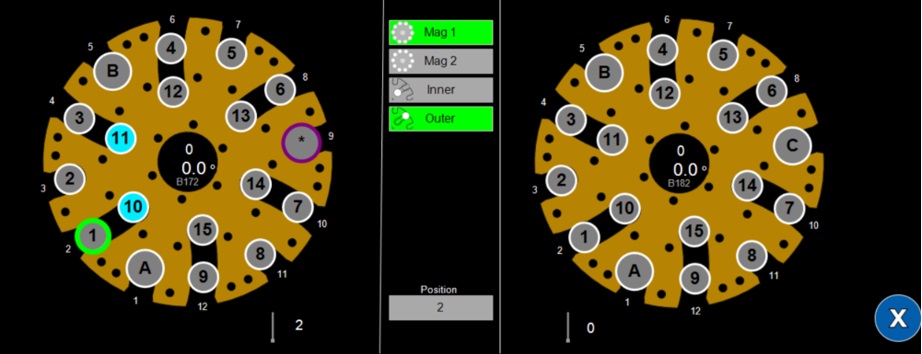
Rod handling. Face holes are short, and their length follows from the feeder and the rod. In a long hole, rods are added as the drill string goes deeper. On the PM 2.1 and PM 2.3M, rods are added manually. The PM 2.312 stores rods in two magazines of 18 and adds them in an automatic cycle, down to 43 m with a 4 ft feeder and 54 m with a 5 ft feeder.
Start with the task, then check the machine against the mine:
Face drilling rigs and longhole production rigs should work so that drilling speed, number of holes and capacity match the work cycle of the whole mine, which usually blasts twice a day. A machine that can drill more holes helps nobody if the face is not ready for the next stage.
Witold HnatMember of the Management Board, Mine Master
On power, the specification tables of most Mine Master rigs list "Diesel/Electric" under power source for tramming and working: a diesel engine for moving between headings, and an electric motor for drilling. Battery electric versions such as the Face Master 1.7KE (BEV) remove the diesel engine, which reduces emissions and heat in the heading. Which one fits depends on mine ventilation, power supply and charging infrastructure, so it is a second-level choice, made after the task is defined.
The requirements are checked in the mine before the order. What is verified and why is described in our article on how to choose an underground drilling rig.
Usually these are two different machine categories. The Face Master 2.1 is the exception worth knowing. It is a single boom rig for narrow veins, with a working unit with a two-axis rotary actuator and a boom that turns 360 degrees in both planes. Mine Master describes it as suitable for face drilling and also for long-hole drilling in very confined spaces, as presented in our article on low-profile and narrow vein mining. For long holes drilled at scale, the dedicated Production Master series is built for the job. The PM 2.1, for example, is a compact production rig, 1.4 m wide and 2.1 m high, that drills holes up to 20 m long in headings where larger rigs cannot turn.
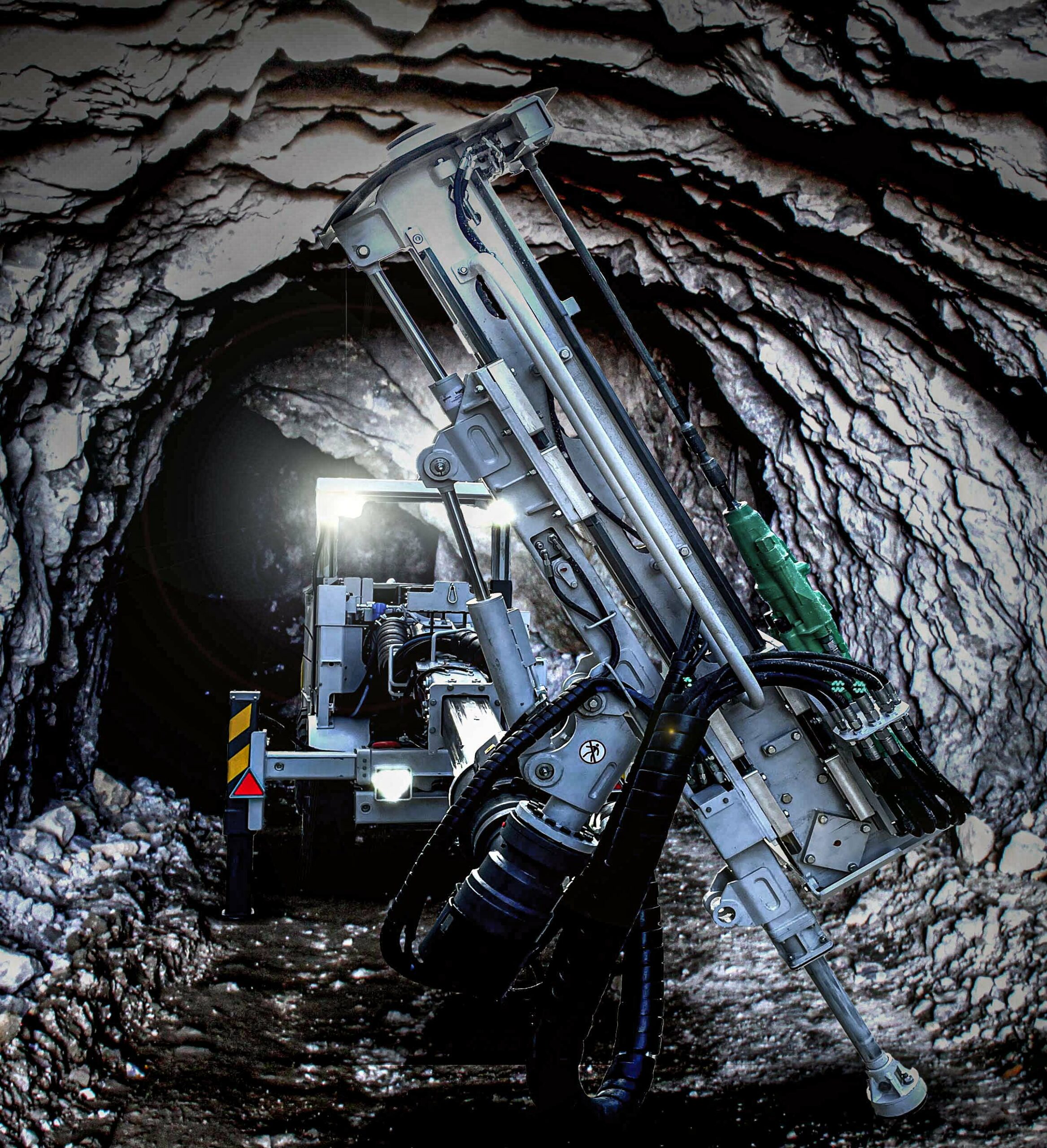
The same idea, automation, solves two different tasks. On the FLP1410, the Automatic Drilling System (ADS) drills the face according to the planned pattern, also during shift changes, and one operator can set up several rigs. It was introduced as the first low-profile automated drill rig in South Africa. On the PM 2.312, automation covers the full long-hole cycle, including rod handling.
Choosing between a face drilling rig and a production drill starts with the drilling task, but it does not end there. Heading dimensions, hole geometry, required depth, rock conditions and mine infrastructure determine the final configuration, which is why Mine Master builds standard rigs and rigs configured for the conditions in which they will work.
Face drilling makes a blast hole pattern in a heading face, to advance the heading or, in some mines, to mine ore. Production drilling makes long holes in fans, rings or parallel patterns inside the ore body to blast larger volumes at once.
No. Long holes need rod handling that adds rods as the hole deepens, a feeder that can be set at the required angle, and a stable position in the drift. A face rig is built around coverage of the face.
The PM 2.1 and PM 2.3M drill holes up to 20 m, the PM 2.311 up to 40 m, and the PM 2.312 up to 43 m with a 4 ft feeder or up to 54 m with a 5 ft feeder. Hole diameter depends on the rock drill, rod and bit; the optimum on the PM 2.312 is 76 to 102 mm, depending on the rod.
Usually not. The Face Master 2.1, a single boom rig for narrow veins, is described by Mine Master as suitable for both face drilling and long-hole drilling in very confined spaces. For long holes drilled at scale, a dedicated production rig is the better fit.
It means the power source for tramming and working: diesel for moving between headings, electric drive for drilling. Battery electric rigs replace the diesel engine with a battery.
Yes. The FLP1410 uses the Automatic Drilling System to drill the face pattern, and the PM 2.312 automates the complete long-hole cycle.
Planning a rig for your mine? Send us the heading dimensions, the required hole length and the rock conditions, and we will propose a configuration.
Contact usMine Master Spółka z o.o.
Wilków, 59-500 Złotoryja
ul. Dworcowa 27
tel: +48 (76) 87 83 511
info@minemaster.eu
NIP: 6940007277
PKD: 2892Z
REGON: 390234796
KRS: 0000114912


 Face Master 1.7
 FLP1410
 Face Master 2.1
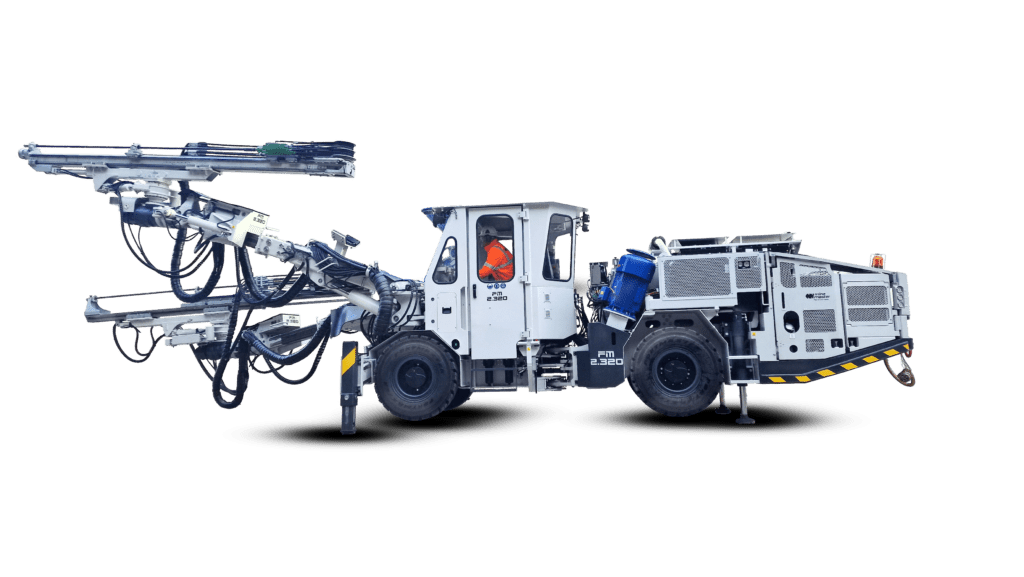 Face Master 2.320
 PM 2.1
 PM 2.3M
 PM 2.311
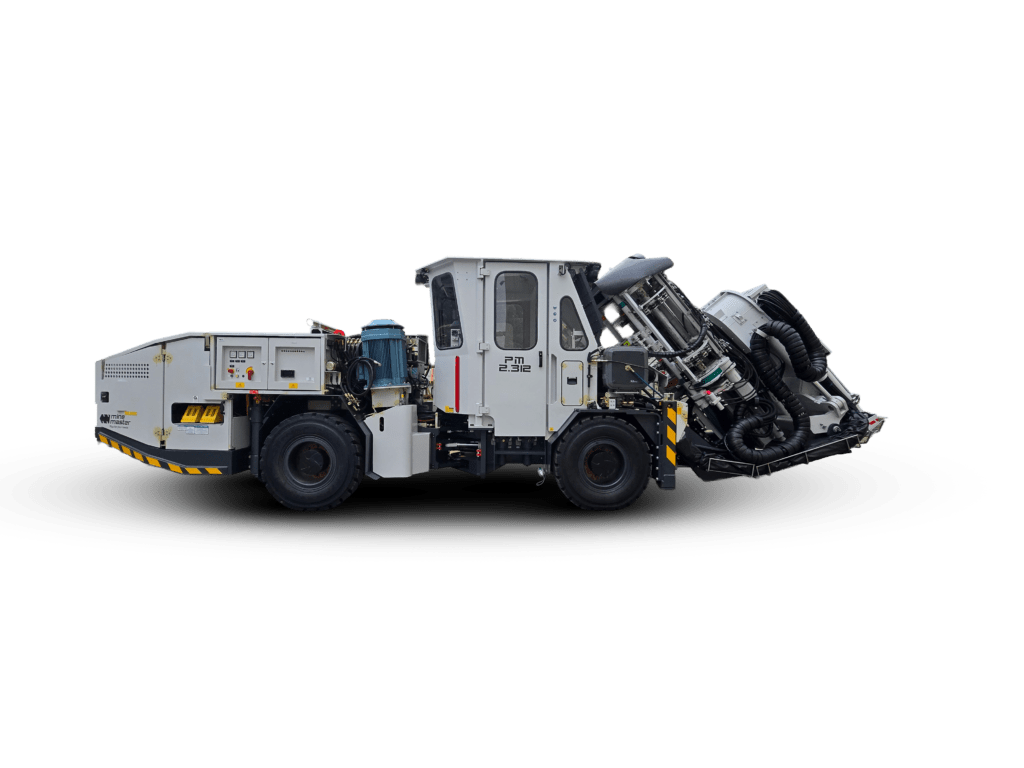 PM 2.312