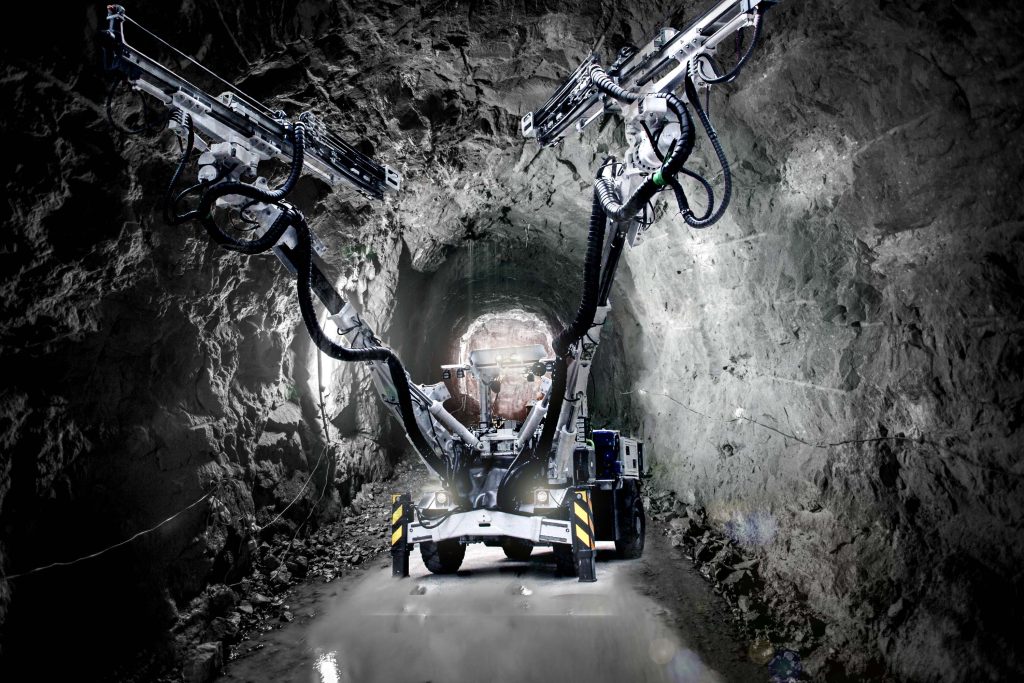
Underground drill rigs are self-propelled machines used to drill blast holes in rock as part of the drill and blast mining method. Also known as face drilling rigs or jumbo drills, they are the starting point of the production cycle in hard rock underground mines — and the accuracy of their work determines the quality of everything that follows.
The primary role of an underground drill rig is to prepare the rock face for blasting. The machine positions its drill boom against the heading face, drills a planned pattern of holes, and those holes are then loaded with explosives and fired. The quality of the blast depends directly on the accuracy and consistency of the drilling.
Underground face drilling rigs are used for:
Precise hole placement creates clean excavation geometry at the face, floor, roof and sidewalls — reducing the need for scaling, simplifying roof bolting and lowering material loss through the entire production cycle.
Underground drilling equipment comes in a wide range of configurations. The main distinctions are based on excavation height, boom configuration, and the geological environment in which the machine will operate.
Jumbo drill rigs are the standard workhorse for medium and large underground excavations — powerful mining jumbo drill rigs designed for high-output face drilling. Available in single boom and twin boom configurations.
Low profile drill rigs are purpose-built for mines where working height is severely constrained — typically chrome, platinum and narrow-reef gold operations where seams may limit height to as little as 1.6 metres. These are not scaled-down jumbos: every component is rethought to function in a space barely taller than a person.
Narrow vein drill rigs address a different constraint: width rather than height. Designed to manoeuvre and drill effectively in headings that are tall enough but extremely tight laterally.
Single boom vs twin boom: a single boom rig drills one hole at a time; a twin boom rig operates two booms simultaneously, covering a larger face area in less time. Twin boom suits high-output, large-face operations; single boom offers greater manoeuvrability in tighter headings.
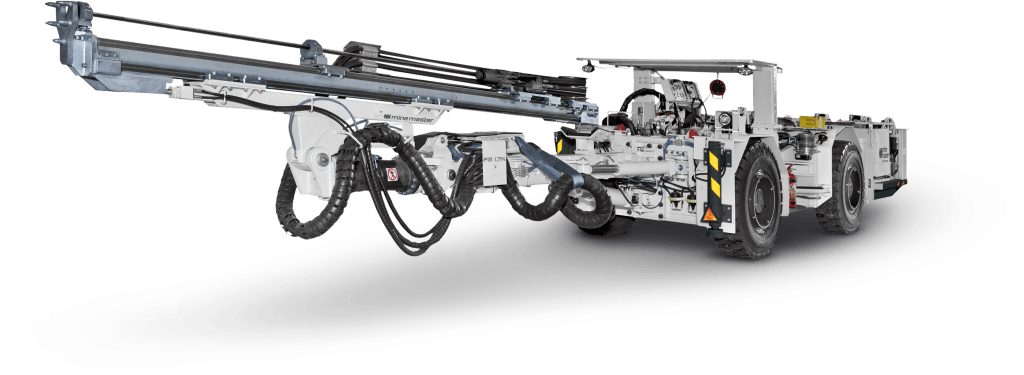
The table below compares the main categories of underground drill rigs by application type, minimum working height and example models from Mine Master's face drilling rig range. Use it as a starting reference — the right choice always depends on the specific conditions of your operation.
| Type | Main application | Typical mine type | Min. working height | Mine Master model |
|---|---|---|---|---|
| Twin boom jumbo | High-output face drilling | Large hard rock mines, tunnelling | 2.3 m+ | Face Master 2.320 |
| Single boom jumbo | Standard underground headings | Hard rock, development drives | 2.3 m+ | Face Master 2.310 |
| Low profile single boom | Ultra-low seam drilling with ADS automation | Chrome, platinum mines | from 1.6 m | FLP1410 |
| Low profile standard | Low seam room-and-pillar operations | Copper, low seam hard rock | from 1.7 m | Face Master 1.7 |
| Narrow vein | Tight lateral space, narrow deposits | Narrow vein gold, silver | 2.1 m | Face Master 2.1 |
Diesel remains the dominant drive system across the industry — proven, reliable and independent of underground electrical infrastructure. Battery electric drive is the clear direction of development: electric machines produce zero exhaust emissions, reduce heat load underground by eliminating the combustion engine, and operate significantly more quietly — which directly reduces ventilation costs and improves working conditions for operators. The right choice depends on the specific conditions and infrastructure of each mine.
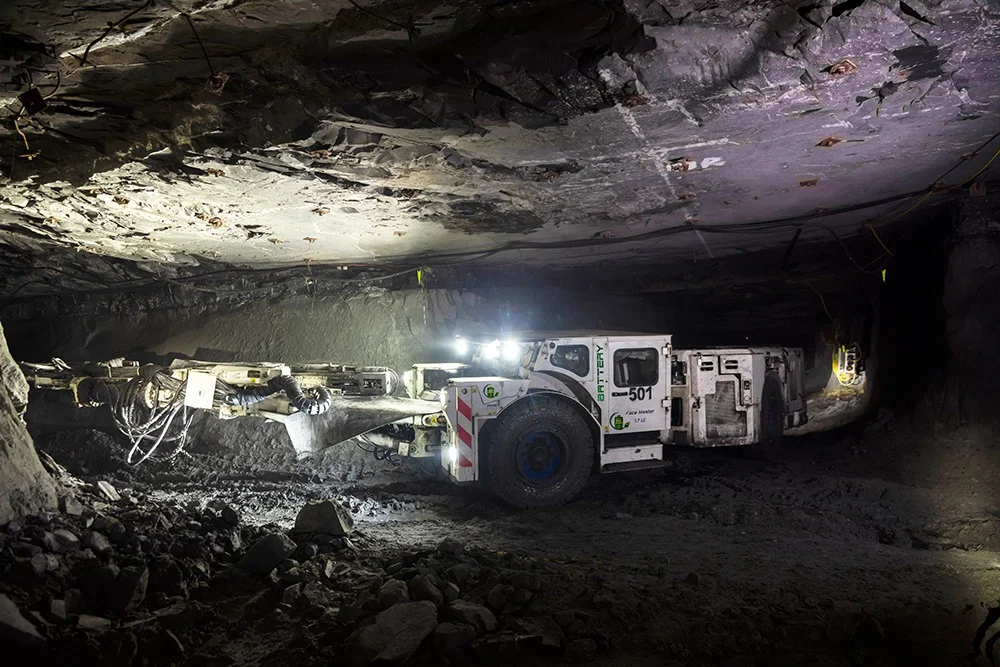
Modern underground drill rigs must meet demanding safety and environmental standards:
For a full explanation of how drilling automation works and what it delivers in practice, see our dedicated article on automatic drilling systems in underground mining.
There is no universal solution. Key factors include: working height and width, rock hardness and abrasiveness, required drilling pattern, available infrastructure and safety requirements. Mine Master works with customers at the specification stage to configure machines for the actual conditions of their operation — see our article on custom underground mining machines for more.
Find answers to the most common questions about underground face drilling rigs, their types and applications in underground mining.
An underground drill rig (also called a face drilling rig or jumbo drill) is a self-propelled machine used to drill blast holes in underground mine workings. It is the first step in the drill and blast cycle used to excavate rock in hard rock mines.
A jumbo drill rig is designed for standard or large underground excavations and prioritises drilling speed and face coverage. A low profile drill rig is purpose-built for mines where working height is severely constrained — typically below 2 metres — and requires a completely different machine design to operate effectively.
A single boom rig has one drilling unit and drills one hole at a time. A twin boom rig operates two booms simultaneously, covering a larger face area more quickly. Twin boom suits large-face, high-output operations; single boom offers greater manoeuvrability in tighter headings.
Drill rig selection directly affects hole placement accuracy and consistency. Precisely drilled holes produce better excavation geometry, more predictable blasting and improved rock fragmentation — reducing the need for scaling, simplifying roof bolting and lowering material loss.
Yes. Mine Master configures drill rigs to match the specific requirements of each operation — working dimensions, boom geometry, drive system, automation level and ancillary equipment. This is particularly important in operations with height constraints, unusual geology or specific safety requirements such as ATEX certification.
Modern drill rigs equipped with automatic drilling systems (ADS) maintain hole positioning accuracy within ±5 millimetres. This level of precision significantly improves blast outcomes and reduces variability across the production cycle.
Depth depends on the machine configuration and the application. Face drilling rigs typically drill development and production rounds to depths of 3–5 metres per hole. Long hole production rigs, designed for stoping, can drill significantly deeper — in some configurations exceeding 40 metres per hole.
Mine Master Spółka z o.o.
Wilków, 59-500 Złotoryja
ul. Dworcowa 27
tel: +48 (76) 87 83 511
info@minemaster.eu
NIP: 6940007277
PKD: 2892Z
REGON: 390234796
KRS: 0000114912

