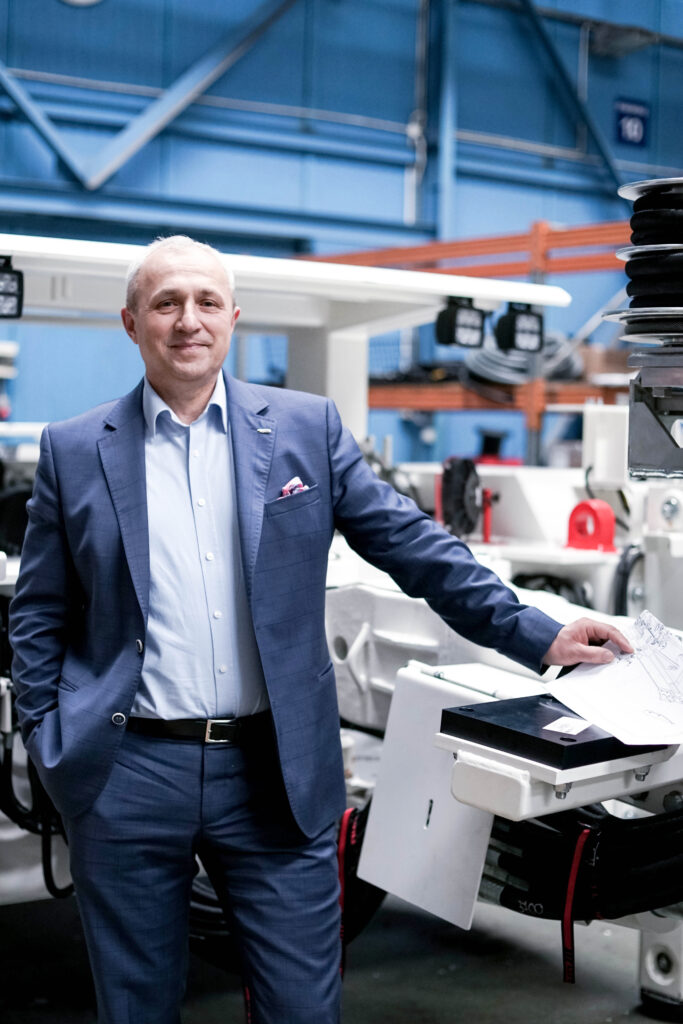
Mine Master designs underground mining machines together with the future user. The design office starts with the working conditions in the mine and an analysis of the patent landscape, agrees the concept with the client in 3D visualisations, and then checks the solution on a test ground and underground. Training for operators and electricians, and remote service support, continue the work after delivery.
Mine Master has its own design office, which covers three disciplines:
Designers go underground to see how the machines work in the mine and what in them needs to change. This is how mining machinery design stays connected to real working conditions, not only to the drawing board.
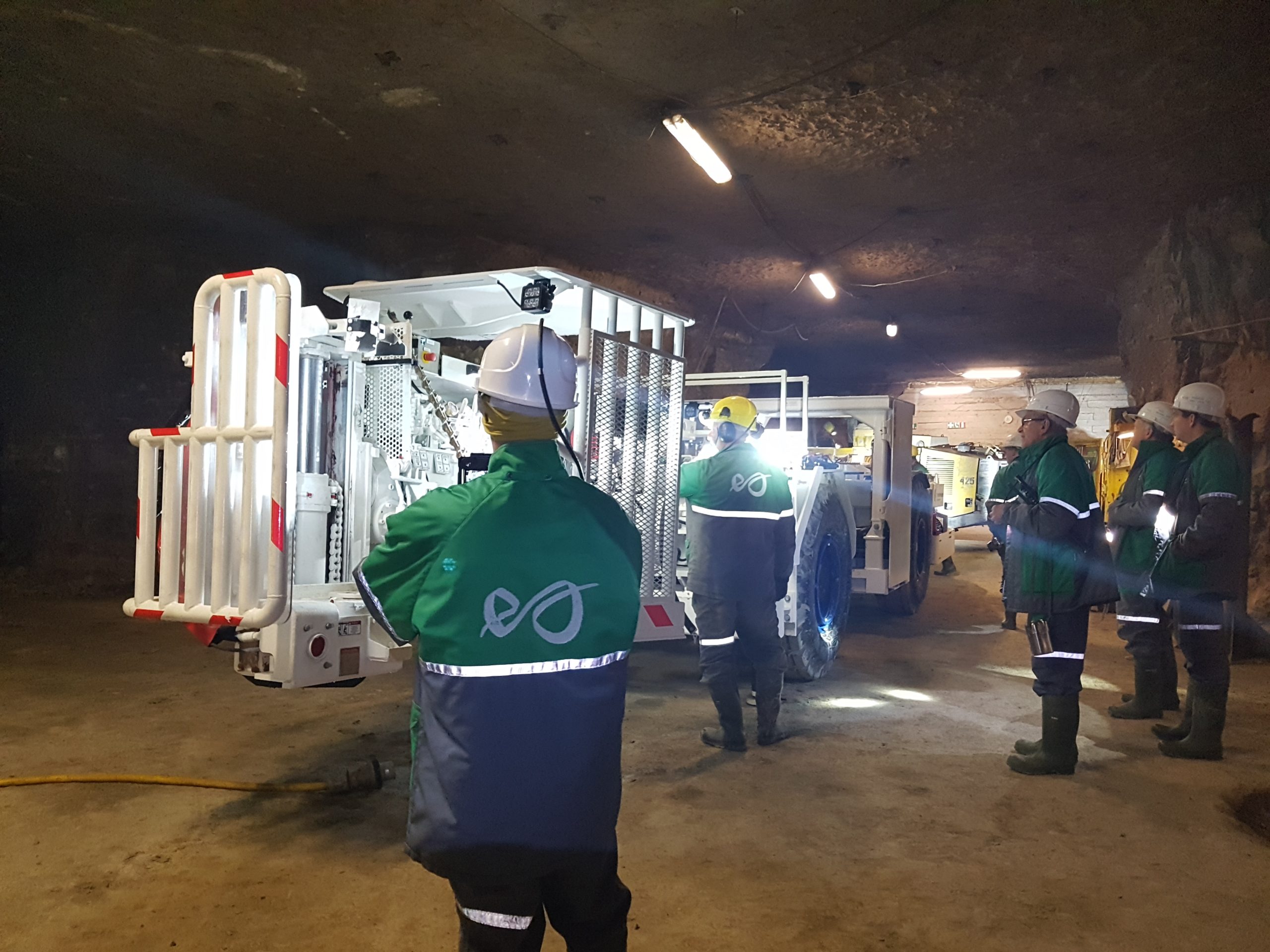
Before the concept stage, the team analyses the patent landscape in the selected technical areas, for complete solutions and for the main subassemblies of the machine. Mine Master has also built an internal library of separated subassemblies and technical issues, which allows the team to reach target solutions faster.
Since 2017, Mine Master has worked with Patent Intelligence Institute (PII) to continuously monitor and analyse the patent landscape. The findings support both long-term technology planning and the day-to-day work of the design teams.
At the strategic level, patent analysis helps identify technology trends, competitors' activities and market niches where Mine Master can develop its own distinctive solutions. At the operational level, engineers can track competitors' new solutions and examine specific technical problems related to machine functions, subassemblies and ongoing R&D projects. The findings complement the designers' experience and the internal library of subassemblies.
Work is currently under way with Polish companies on using AI that takes into account the solutions filed at patent offices, together with Mine Master's own experience and technical solutions.
When the design of new mining equipment is based on the client's requirements, the client should see the concept early. Mine Master presents it in 3D, and the client's comments are applied directly in the models.
When we look for new solutions and want to meet the expectations and requirements of a future client, it is important, once we know the working conditions of the machines, to move to active cooperation with the client: 3D visualisations of the concepts of new technical solutions, with the client's comments introduced into those models. Within a short time this approach tells us whether we are going in the right direction and shortens the time needed to reach solutions that the future client accepts.
Lesław OstapówChief Designer / Design Manager, Mine Master
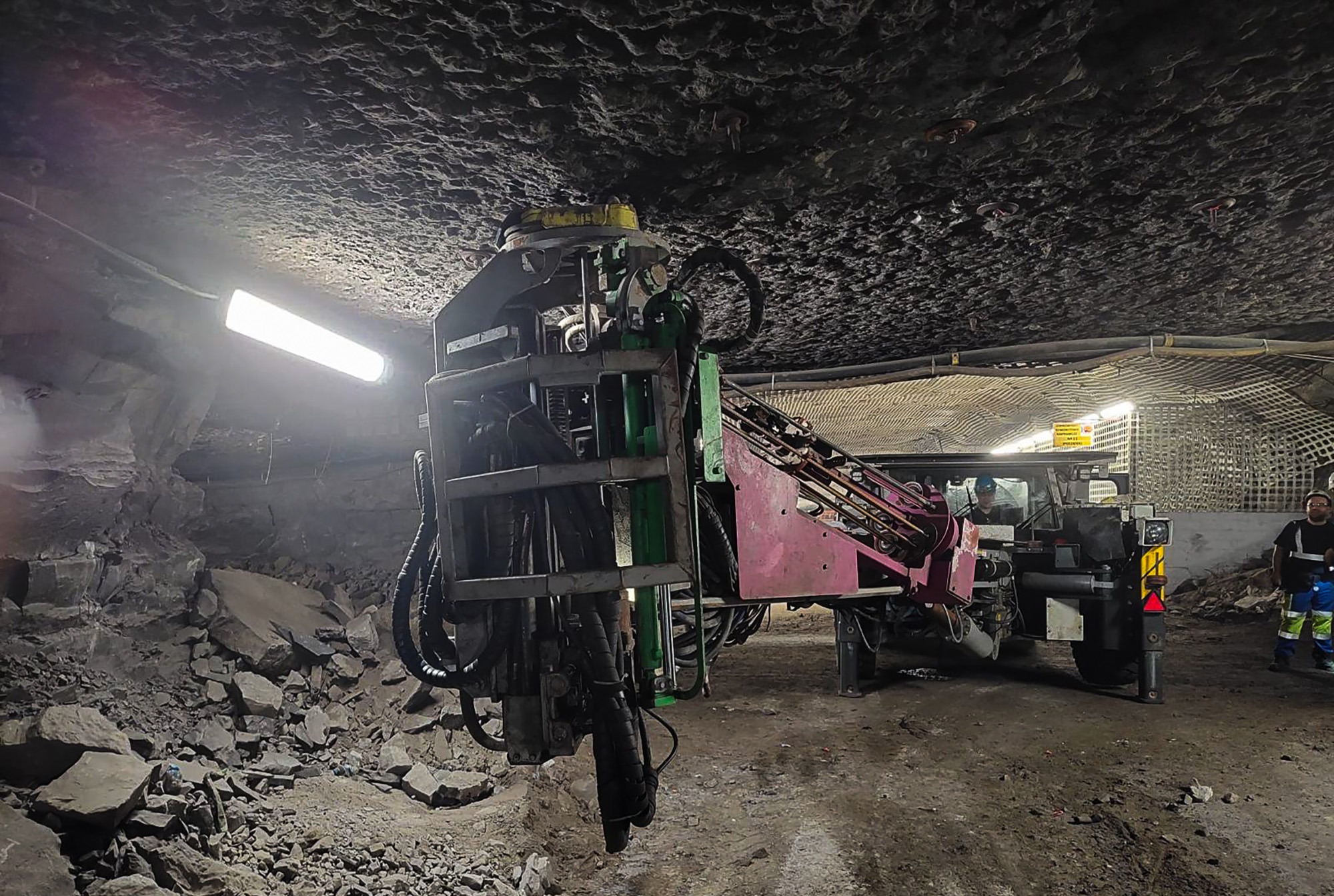
The automatic turret of the Roof Master 1.7KA shows how this works in practice. The working system was developed with J.H. Fletcher, which supplies it to Mine Master. Work on the turret began in 2010, and its first prototype was tested underground. Bench tests of the current version on a test ground showed the potential of the new working system, and its redesigned construction took into account comments from machine users.
The operator works in an air-conditioned cab, the machine installs 1.8 m bolts in a 2.2 m heading, and the bolting cycle is automatic, started with one button. The machine then went underground at a KGHM mine, where operators trained on it rated its safety and the comfort of the cab highly, and software improvements were introduced during the trials. It belongs to the automatic machines category, next to the other roof bolting rigs.
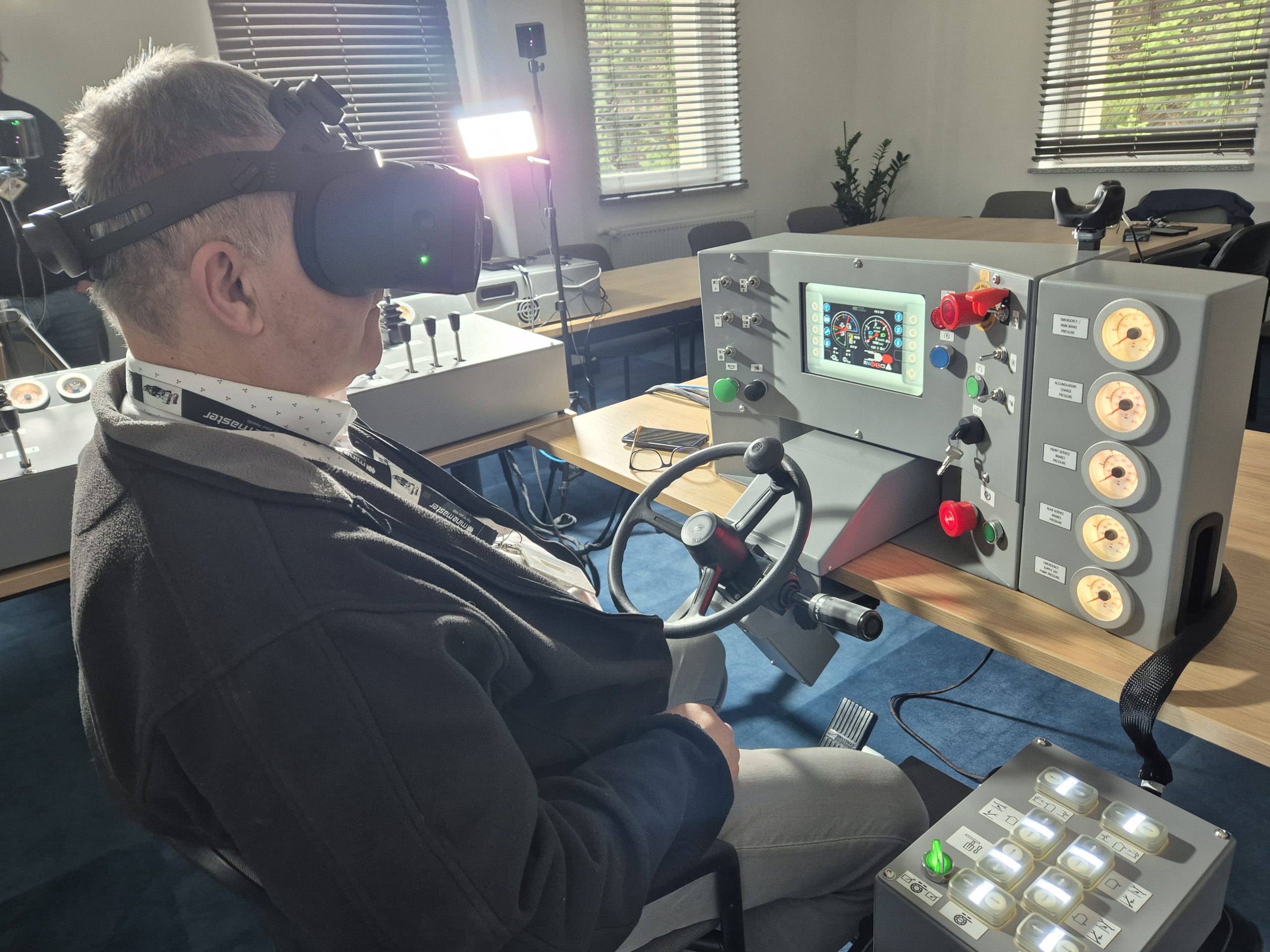
A roof bolter operator or jumbo operator can learn the machine in a VR simulator that replicates the driving panel, control panel, joysticks and pedals of the Face Master 2.320. The exercises include driving in narrow headings, boom control, face drilling with a set blasting pattern and bolting with the short feed, and the system reports the errors made during training. Details are on the page about the underground drill simulator.
Electricians have their own training stand, built on the electrical frame of the Roof Master 1.7K. It simulates the most common faults of the electrical system and is used to train service electricians and KGHM staff, including in diagnostics of the electrical system and CAN networks.
Support continues after the machine goes into service, through software updates and remote diagnostics.
More about service is in the after sales section.
If a standard rig does not fit your conditions, the same process applies: working conditions first, then 3D concepts and your comments, then tests. Mine equipment design at Mine Master is described on the page about custom mining machines. If you are still choosing between existing models, start with our guide on how to choose an underground drilling rig.
The design office analyses the working conditions and the patent landscape, presents the concept to the client in 3D visualisations, introduces the client's comments into the models, and then tests the solution on a test ground and underground.
In a short time they show whether the design is going in the right direction, and they shorten the time needed to reach a solution that the client accepts.
In stages. The automatic turret of the Roof Master 1.7KA was first tested on a test ground, and the machine then went underground at a KGHM mine, where operators trained on it and their comments were taken into account.
Yes. The process starts with the working conditions in which the machine will operate, and the client's comments are built into the 3D models before production.
Operators train in a VR simulator that replicates the controls of the Face Master 2.320 and reports the errors made during training. Electricians train on a stand built on the electrical frame of the Roof Master 1.7K.
Looking for a machine designed for the conditions in your mine? Describe your working conditions and requirements, and we will come back with a proposal.
Contact usMine Master Spółka z o.o.
Wilków, 59-500 Złotoryja
ul. Dworcowa 27
tel: +48 (76) 87 83 511
info@minemaster.eu
NIP: 6940007277
PKD: 2892Z
REGON: 390234796
KRS: 0000114912

